Growing up in the Rockies I was exposed to landscape photography from a very young age (thanks Mum).  I’ve always loved hiking and obviously if you spend an entire day hiking up a mountain you’re going to want to take a picture or two once you’re at the top.

Landscape photography is amazing in the summer and early autumn.  The freshness of the air, the sounds of birds and soft breeze make for an incredible experience.  In the winter it can really suck.  So why do it?  Because the images are ssssooooooooo good.  When you get the sun hitting the rocks and snow at that perfect angle and you just gotta get that shot. There’s nothing like it.
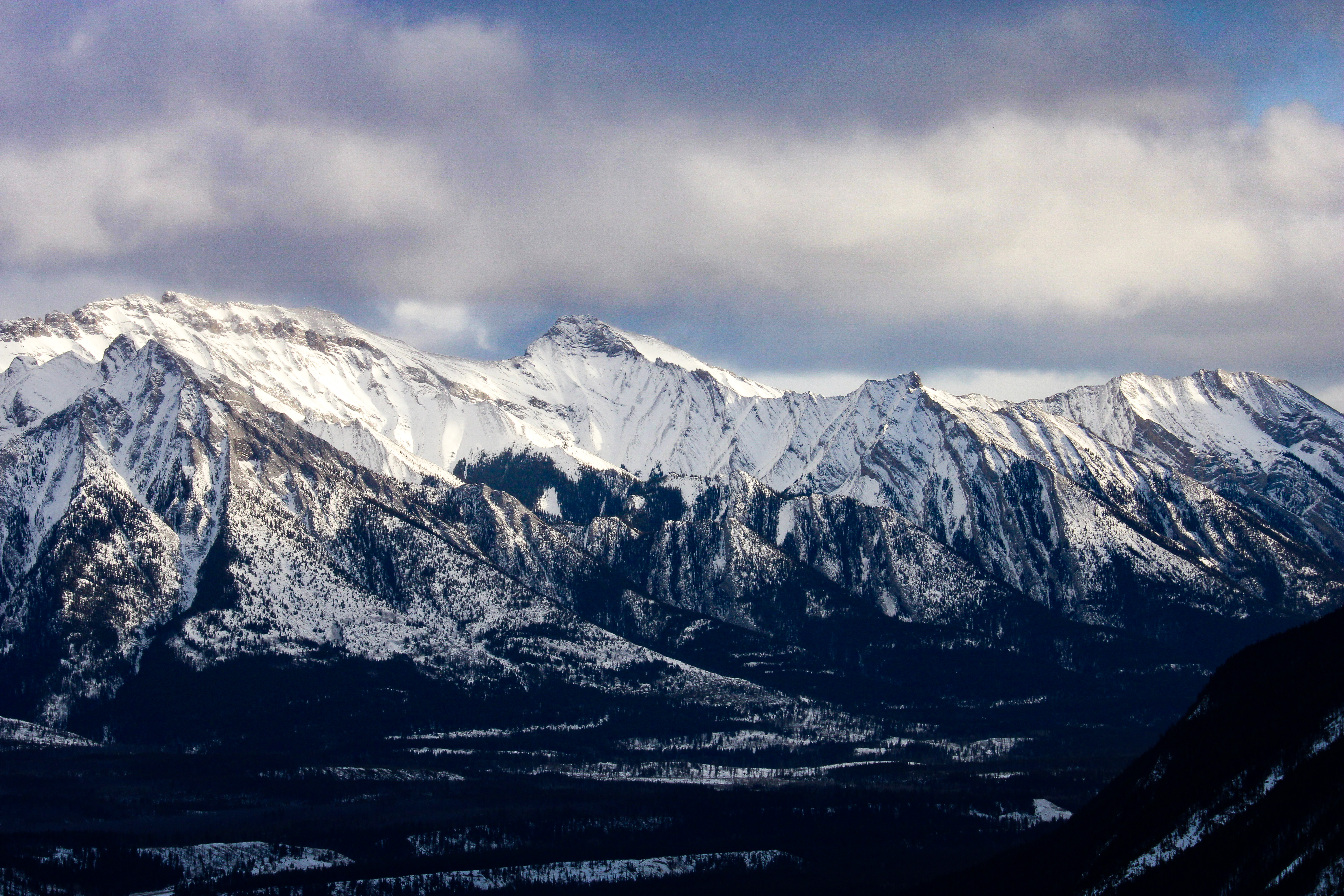
Taking a picture of a mountain, next to a lake at sunset at about -20 degrees with a wicked wind, coming off the lake slapping you in the face, blowing over your tripod because you weren’t going to carry sandbags through the waist deep snow you had to go through to get next to the lake for the composition that you’re after is awesome. Especially when you have to take your gloves off to adjust your camera settings.

Alternatively you can go to Banff and whenever you start to get cold you can pop into any of the billion shops around, pick yourself up a cup of coffee and maybe even a beaver tail because why not?  Banff is great.
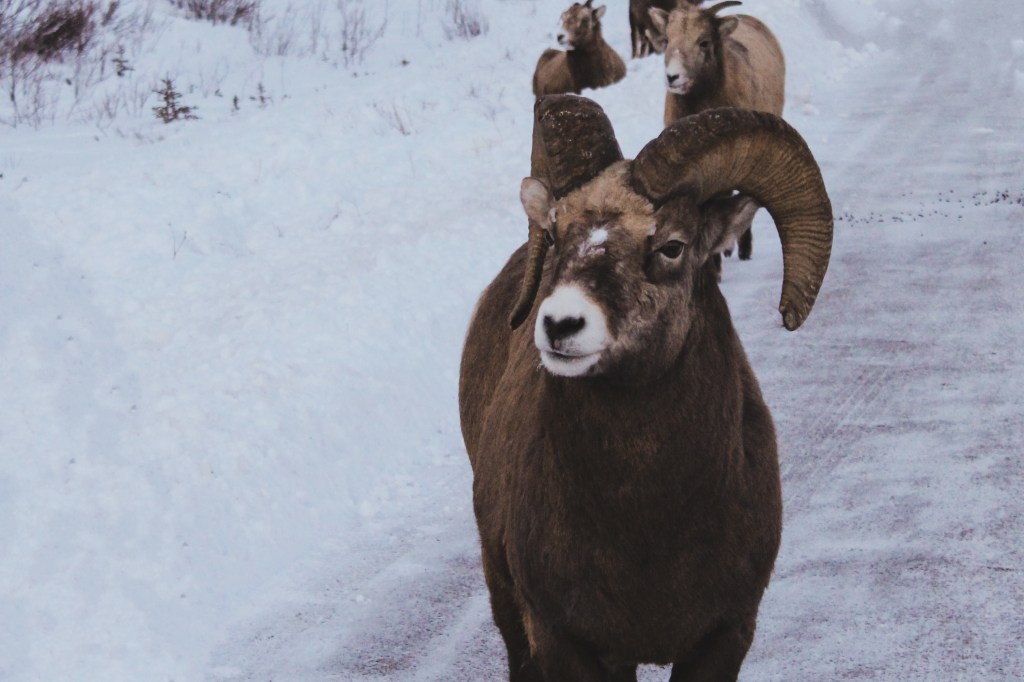
Western Alberta, Canadian Rockies

You might be wondering, why up close ?

It’s simple.

I was without a telephoto lens.

This quickly became a nightmare. I was caught with gear to shoot mountains and ran into some of those mountain’s residents. I had to quickly work with what I had to get the best shots that I could.

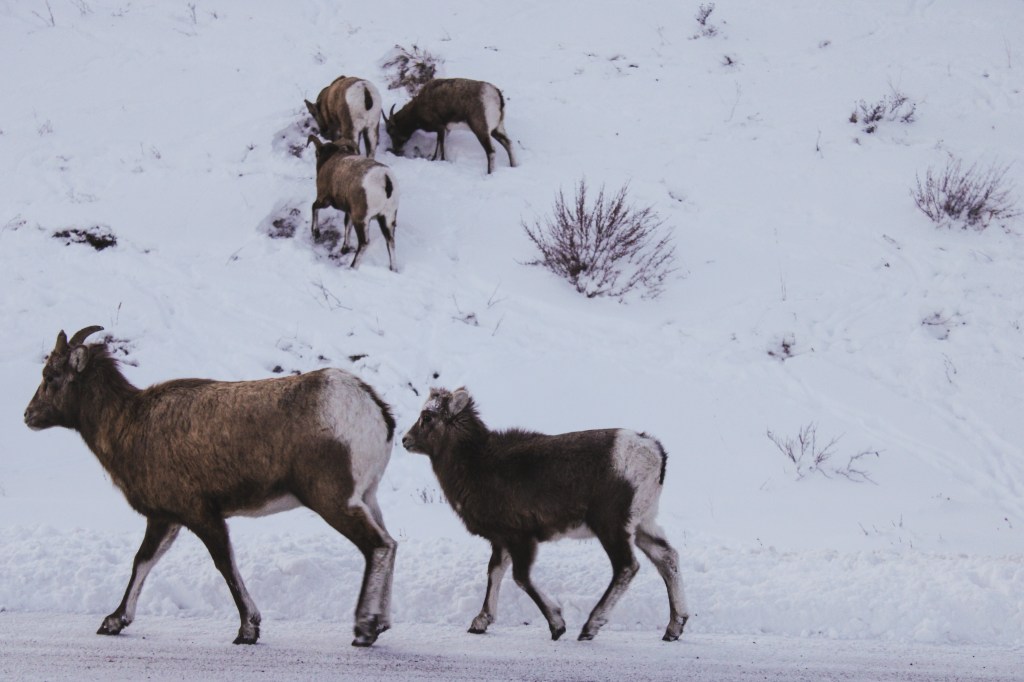
There were several cars at a halt on the road as a herd of bighorn sheep wandered across the road and up a mountain; all of them looking somewhat lost. It was the first time my wife had seen an actual mountain too; and bighorn. Who’s to say I wasn’t trying to get the best photo of these goats just for her keepsake? I wanted to seize the opportunity to capture a few great shots of the Alberta provincial animal.

It may be the provincial animal, but it is not a common animal to see.

My initial reaction (like most people) was to grab my camera; I had a Canon 1500 D with me. My wife and I bought this camera for it being a great travel, lightweight DSLR. I was still in the car at this point, as the temperature outside was hovering around -20 degrees Celsius. I lowered the window and zoomed in as far as I could with my 55mm lens.

You could imagine my disappointment…

In order to get a close up photo of these mountain goats, I needed to get up closer. I jumped out of the car and hurried over to the herd. They seemed harmless; that was until I got too close to (what looked like) the leader of the herd. I knew that I had to hurry myself once he tilted his head (and horns) towards me, as though he was warning me to keep my distance before ramming.

I was able to snap a few neat shots, less than 1 meter away from the herd. Whilst I wouldn’t recommend changing your camera settings in front of a herd of wild bighorns, my only advice would be to always have a telephoto lens to avoid getting too close to any animal that could do harm to you.

It was a great experience, nonetheless, and my wife adores the up close snaps. It took about 48 hours after this experience for me to have a 55-250mm lens in my kit. Lesson learned; have gear for every possible situation and if you need to photograph bighorn sheep up close, wear a cup.